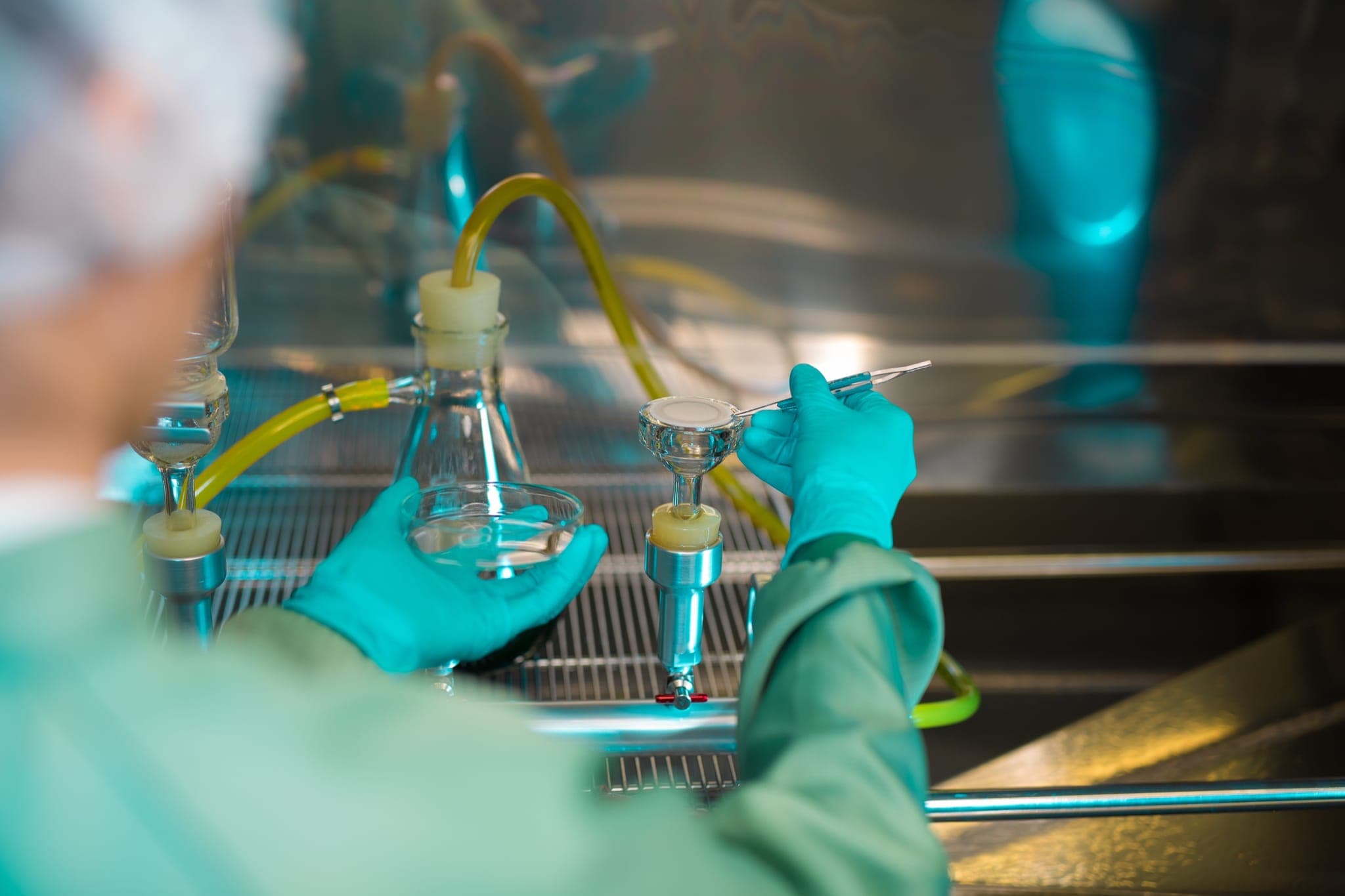
Laboratory
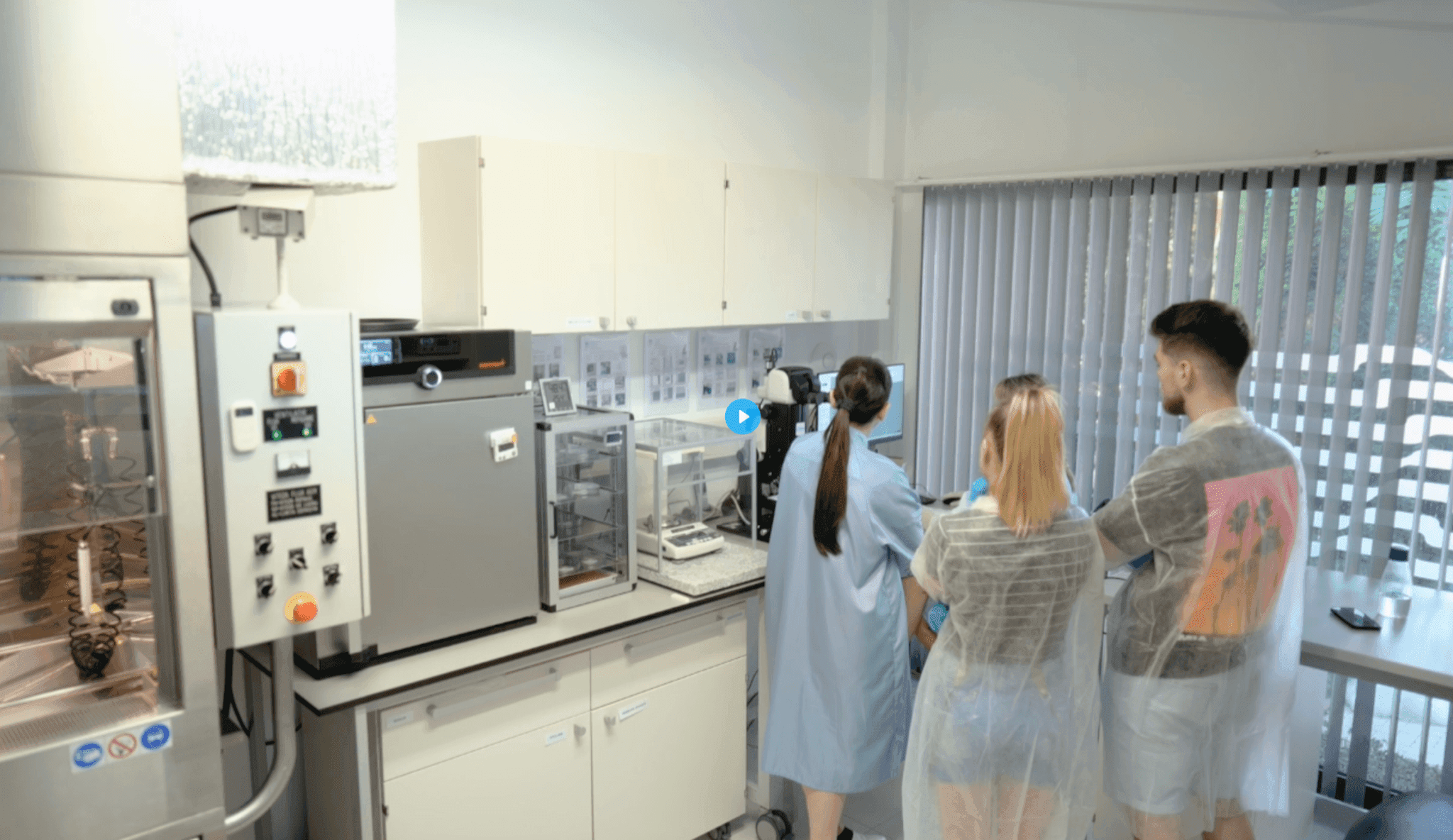
The Klarwin laboratory integrates precision equipment in a controlled clean-room environment — delivering standardized particle contamination analysis for fluids, components and assembly environments. Every analysis follows documented procedures; testing reports may include classified microscopic images, granulometry, gravimetry and cleanliness codes.
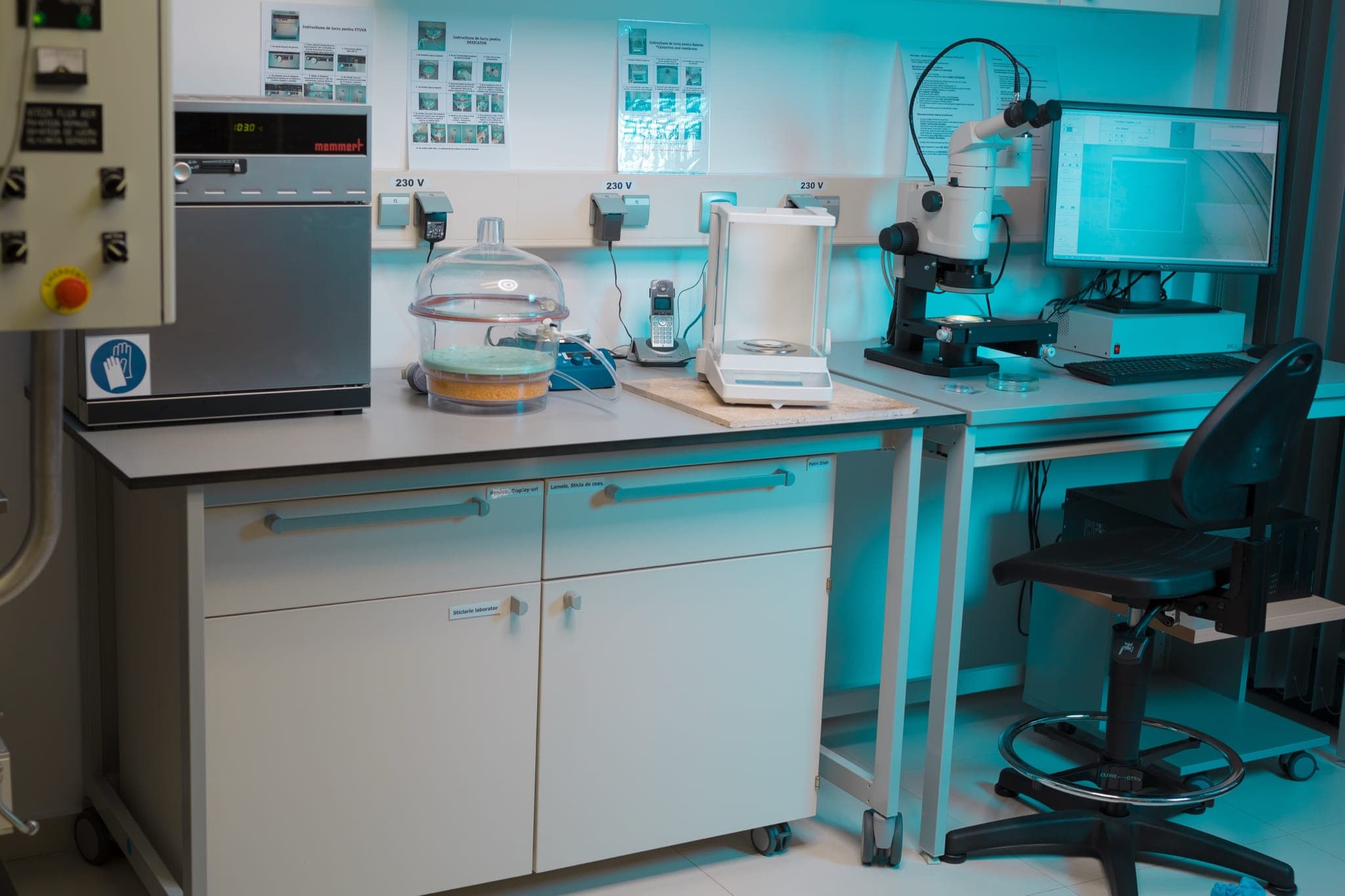
Laboratory Equipment
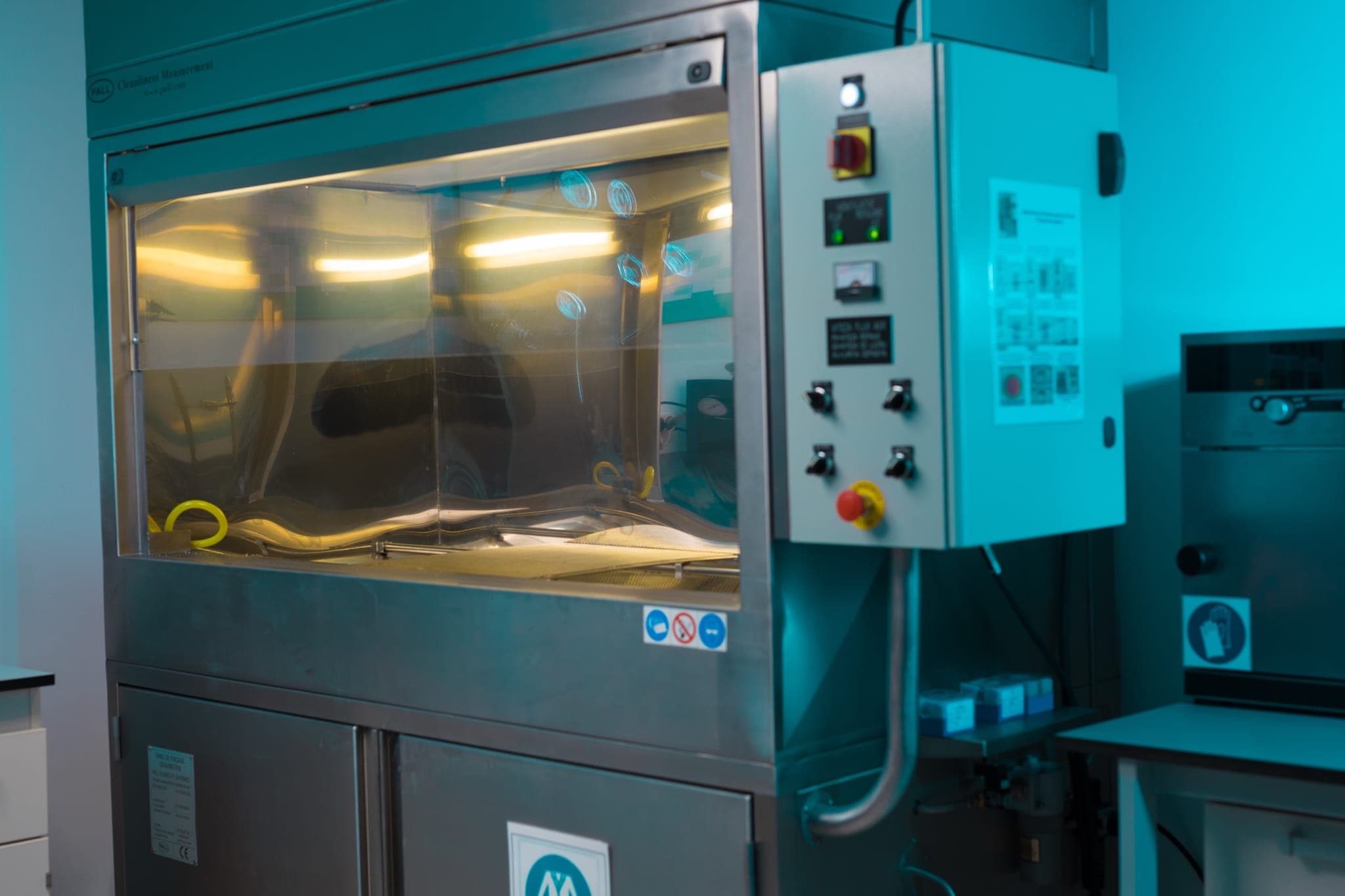
The cleanliness cabinet creates a strictly controlled environment equivalent to ISO 14644 Level 5 clean room — ensuring secondary (cross-) contamination is minimal and results reflect the true condition of the samples.
- Cleanliness Cabinet — controlled clean-room space (ISO 14644 Level 5); contaminant extraction from sample surfaces via liquid or gas transfer medium, retained on filtration membrane
- Jomesa Optical Microscope — automatic identification and counting of metallic, non-metallic and fiber contaminants with dimensions ≥ 5 µm; particle size distribution, automatic cleanliness code reporting, clear images of most relevant contaminants
- Fluitec MPC Color Spectrophotometer — performs membrane patch colorimetry on oil samples for the early detection and quantitative evaluation of varnish potential
- Vacuum Filtration System — retains contaminants from liquid samples on membranes for subsequent gravimetric, microscopic or colorimetric evaluation; also used for small-scale industrial filtration process simulations
- Particle Counters — laser technology or calibrated sieve flow technology; rapid, reliable results for industrial fluid cleanliness class determination
- Water Sensor (Pall WS19) — determines dissolved water content (below saturation level) in oil
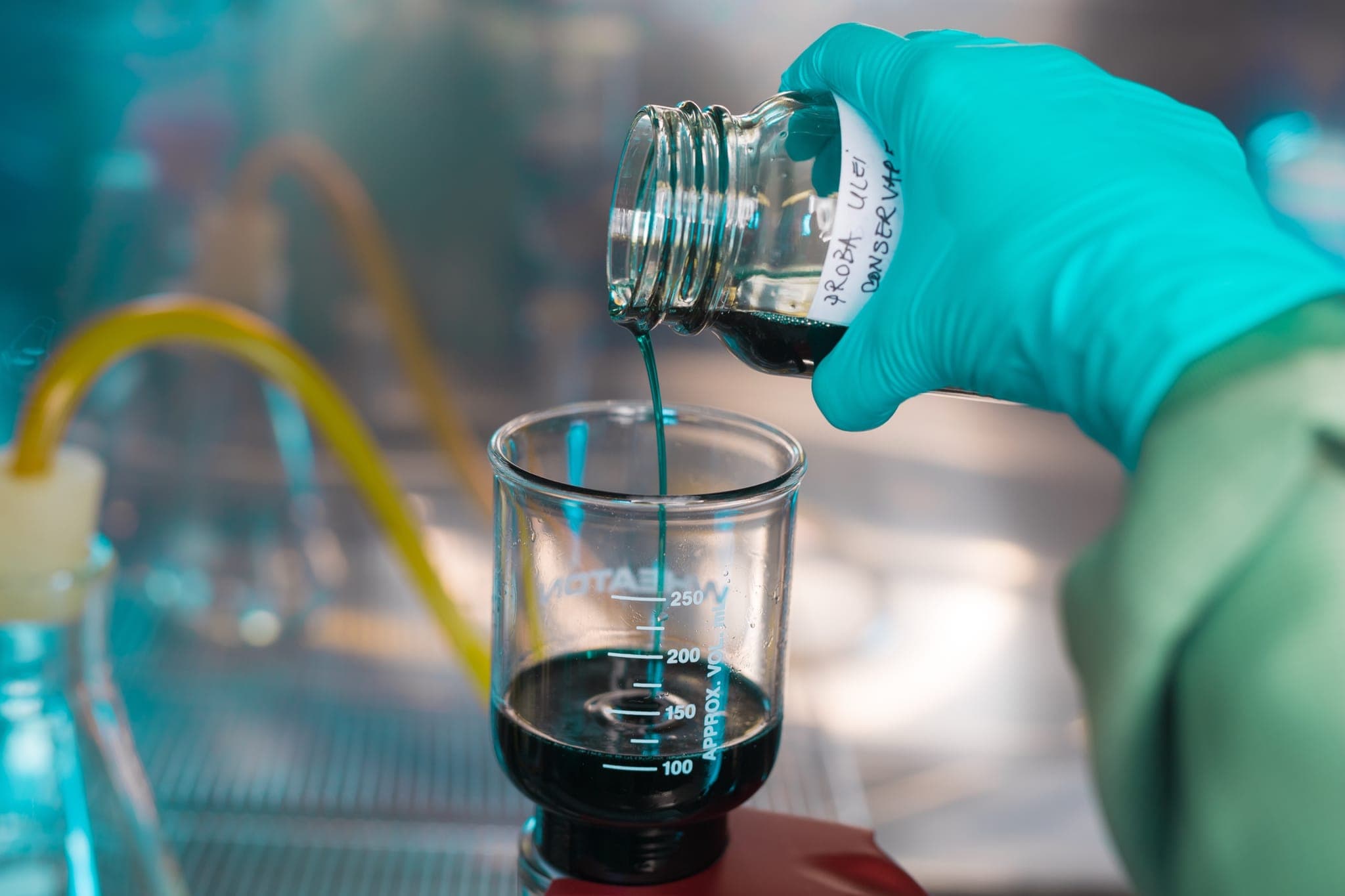
Fluid Particle Contamination Analysis
Cleanliness determination of industrial fluids using standardized procedures. The analysis report is delivered by the laboratory; based on results, the technical department provides interpretation and proposes filtration and separation solutions to keep the process within specifications.
Report deliverables
- Microscopic images of contaminants — classified by nature: metallic, non-metallic, fibers
- Granulometry — cleanliness class per ISO 4406 / SAE AS4059F (NAS 1638) and particle distribution
- Gravimetry according to ISO 4405
- Dissolved water content in oil
- Varnish presence in oil according to ASTM-D7843-21
- Technical interpretation and filtration/separation solution proposals (from technical department)
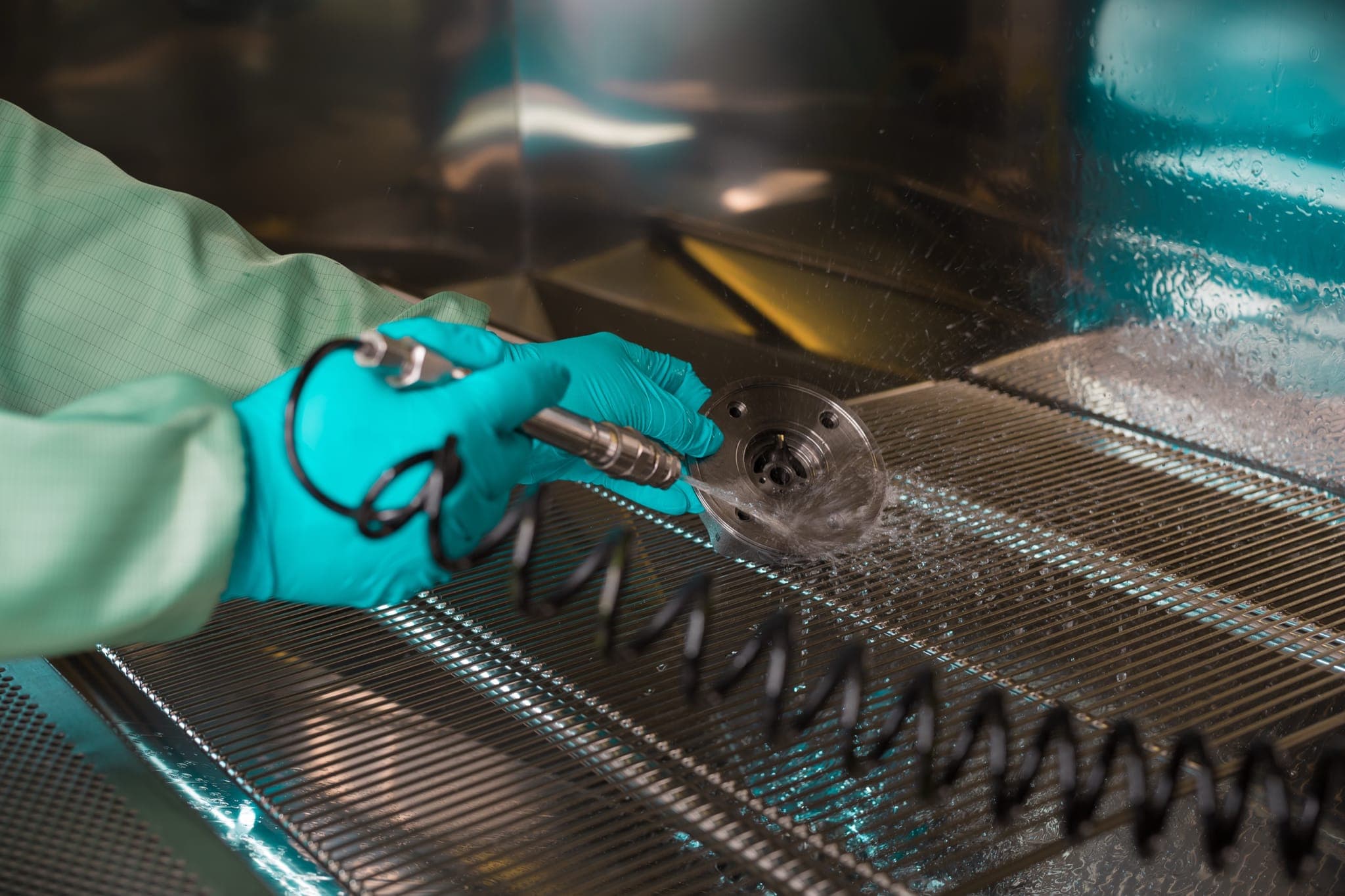
Component Cleanliness Analysis
Technical cleanliness determination of components — primarily automotive — using standardized procedures and industry-specific test protocols.
Report deliverables
- Granulometry — particle size distribution and cleanliness class per ISO 16232 / VDA 19.1
- Gravimetry — total particulate mass per component
- Microscopic images — classified contaminants (metallic, non-metallic, fibers) with dimensions and counts
- Qualification test — establishes compliant, repeatable test parameters for effective extraction procedure
- Technical interpretation and improvement recommendations (from technical department)
Environmental Air Cleanliness
Technical cleanliness determination in assembly processes and industrial facilities. Production environment cleanliness is evaluated through multiple analysis types: adhesive membranes (particle traps), plexiglass plates exposed in facilities, and components sampled at intermediate assembly stages.
Report deliverables
- Particle deposition rate — classified by nature and size, per exposure period and location
- Illig sedimentation value as per VDA 19.2
- Microscopic images — identified contaminants with dimensional analysis
- Technical interpretation and contamination reduction recommendations (from technical department)
Personalized Training
Clear training programs that inspire — for all levels of experience and qualification.
- Component technical cleanliness (theory + practice) — based on ISO 16232 and VDA 19.1 guidance
- Technical cleanliness in assembly processes (theory + practice) — based on VDA 19.2 guidance (environment, logistics, personnel and assembly equipment)
- ISO 17025 requirements application — general competency requirements for testing and calibration laboratories, tailored to the technical cleanliness domain
We supply the consumables and equipment your lab runs on
Reagents, calibration standards, pipettes, glassware, analytical instruments — Klarwin is the single supplier your lab can rely on for traceable consumables and certified instruments. Talk to an engineer who knows the catalogue.
CONTACT A CONSULTANT
We supply the consumables and equipment your lab runs on
Reagents, calibration standards, pipettes, glassware, analytical instruments — Klarwin is the single supplier your lab can rely on for traceable consumables and certified instruments. Talk to an engineer who knows the catalogue.
CONTACT A CONSULTANT