Klarwin's laboratory earns an “excellent performance” rating in an international proficiency test
18 September 2026
In an international interlaboratory comparison organised by DRRR Germany, the Klarwin laboratory was rated “excellent performance” with a Z-score of 0.48 — independent proof that the data leaving our laboratory is accurate.
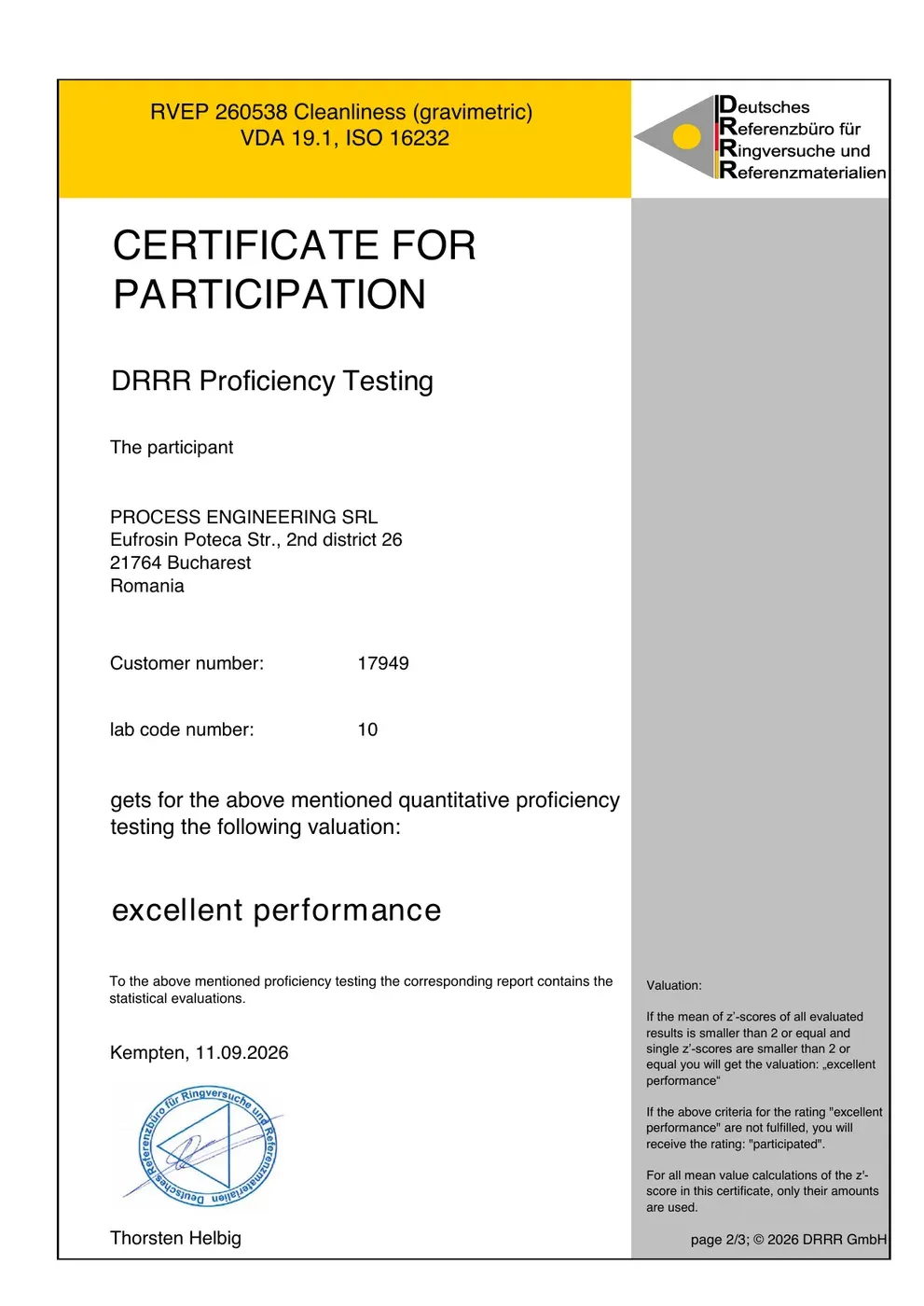
Klarwin's laboratory has been rated “excellent performance” in an international interlaboratory comparison organised by DRRR Germany (Deutsches Referenzbüro für Ringversuche und Referenzmaterialien — the German Reference Office for Interlaboratory Comparisons and Reference Materials) — with a Z-score of 0.48. In a proficiency test where the whole point is accuracy, the closer the score sits to zero, the more precise a laboratory's results are.
Results you can rely on
A laboratory's value rests on one thing: whether its numbers can be trusted. An independent interlaboratory comparison is how that trust is proven — measured, not merely claimed.
This result confirms, in an auditable way, that the data leaving our laboratory is accurate.
What the comparison involved
The comparison is held once a year, with international participation. Every laboratory receives and analyses an aliquot of the same sample, and is then scored on how closely its result matches the reference value. This year 11 laboratories took part, most of them from the EU. Klarwin finished on the podium, within a hair of the top two (−0.21 and 0.44) — a tight, competitive field.
About DRRR
DRRR (Deutsches Referenzbüro für Ringversuche und Referenzmaterialien — the German Reference Office for Proficiency Testing and Reference Materials) is one of the most demanding and widely recognised proficiency-testing bodies. It is accredited to ISO/IEC 17043 by both the German national accreditation body (DAkkS) and the American one (A2LA) — which is what gives a result like this its weight.
What it means for our clients
The test covered technical cleanliness (gravimetric analysis), to VDA 19.1 and ISO 16232 — the standards that decide whether a manufactured component is clean enough to perform reliably, from automotive to precision industry. An independently verified laboratory means our partners can make decisions — acceptance, release, supplier qualification — on numbers that hold up to scrutiny.

Thank you to the team
Congratulations to our laboratory colleagues for the dedication and professional rigour that made this result possible. It is their discipline, sample after sample, that turns a standard into trustworthy data.
Frequently asked questions
What is an interlaboratory comparison (proficiency test)?+
It is an exercise in which several laboratories independently analyse an aliquot of the same sample, and their results are compared against a reference value. It is the standard way a laboratory proves its accuracy to a third party rather than simply asserting it. The comparison Klarwin took part in was organised by DRRR Germany, with 11 laboratories, most from the EU.
What does the Z-score mean?+
The Z-score shows how close a laboratory's result is to the reference value: the closer to 0, the more precise the result. A Z-score of 2 or below (in absolute value) earns the “excellent performance” rating. The Klarwin laboratory scored 0.48.
What is technical cleanliness testing (VDA 19.1 / ISO 16232)?+
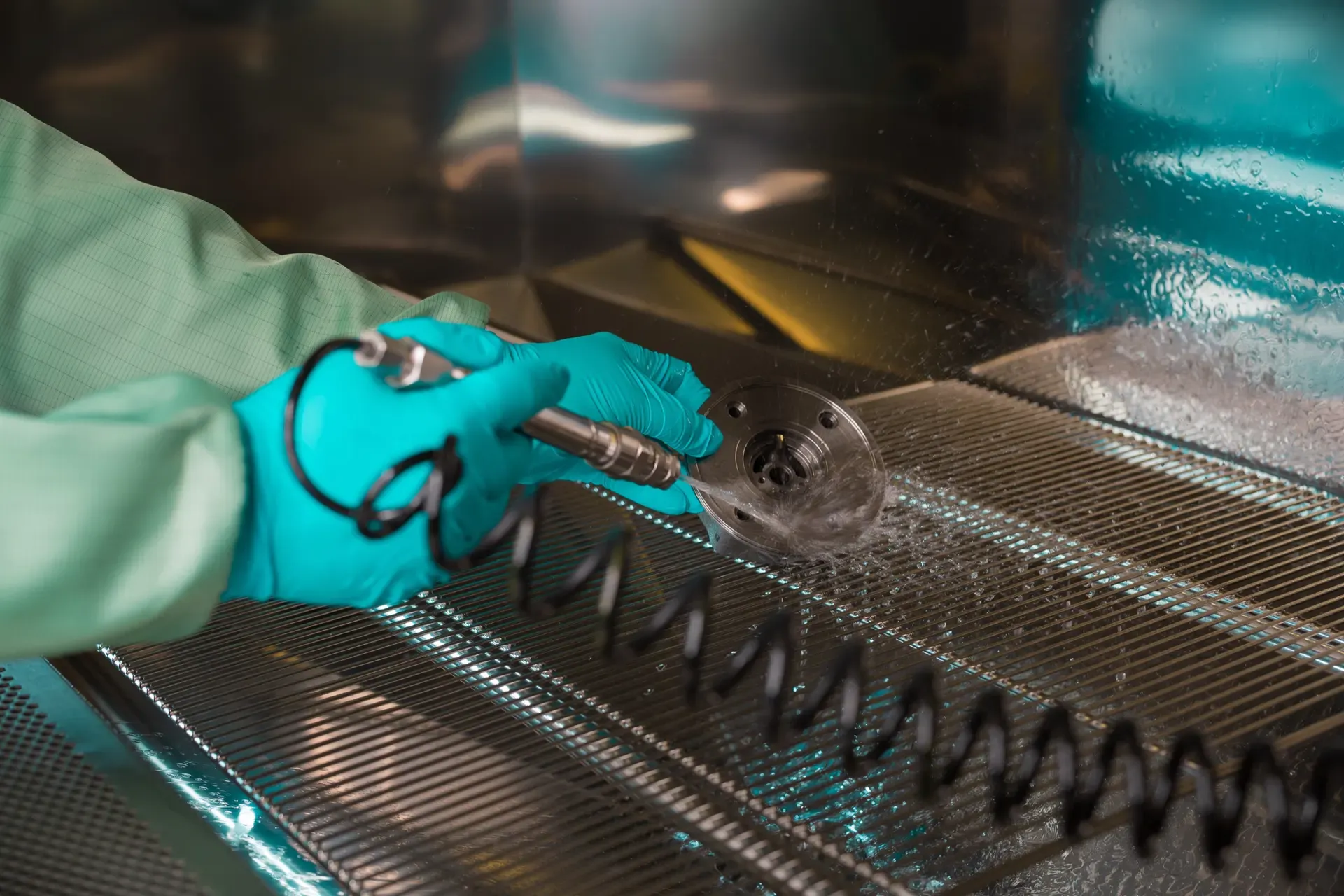
It is the method for measuring how clean a manufactured component is — residual particles are extracted by washing, filtered, then weighed (gravimetric) and characterised. VDA 19.1 and ISO 16232 are the reference standards in the automotive and precision industries, where a single leftover particle can compromise a component's function or lifespan.
What is DRRR and why does its accreditation matter?+
DRRR (the German Reference Office for Proficiency Testing and Reference Materials) is one of the most recognised proficiency-testing bodies. It is accredited to ISO/IEC 17043 by DAkkS (Germany) and A2LA (USA), which makes a rating earned there internationally recognised.
What does this result mean for Klarwin's clients?+
It means the laboratory results their decisions rest on — component acceptance, batch release, supplier qualification — come from a laboratory whose accuracy has been independently verified at an international level.
Tags